Are you ready to move beyond falsie strips in your quest for thicker, longer lashes? Visit a lash specialist for fluttery extensions. Unlike pre-manufactured lashes, lash extension professionals employ their knowledge to create the most perfect set for you. After all, “Lashes aren’t one size fits all,” adds Trina Dial, Maven Artistry’s founder.
“A good artist will assess your facial features and guide you in selecting the most suitable look.” Cynthia Tsang, Robyn Fisher, and Malin Singleton, all lash professionals, agree with Dial, saying that you can make any lashes look precisely how you want.
As a result, there are numerous options to consider before going to your appointment. Everything from the curl type to the style of lashes can radically alter your appearance. “Depending on the style, a lash artist can add anywhere from 60 to 600+ lashes to each eye on the first application,” says Dial.
For example, you can buy synthetic lash extensions, faux silk, or faux mink. You can then customise your shape, which includes options such as cat eye and doll eye. This is a fully personalised procedure, with two more options to consider: style and curl pattern. If you’re feeling overwhelmed by these options, take a deep breath.
An in-depth introduction to the many types of lash extensions is provided here to assist you comprehend the intricacies.
Who is it for?
Before we begin, here’s some bad news: not everyone is a good candidate for lash extensions. For example, if you have an active eye infection or have just had eye surgery, you will be unable to receive the treatment. Similarly, if you have glaucoma or severe dry eye syndrome, you are not a good candidate for lash extensions.
However, if you do not fall under any of those categories, you are likely to be eligible for lash extensions. Before making a full commitment, there are a few things to consider.
“Ninety-nine percent of the individual lash extensions on the market are made from synthetic materials, as most everyone in the eyelash community has moved away from using animal hair,” says Dial. These are the three most popular materials available:
Synthetic lashes, the most prevalent type of lash extension, are constructed of a nylon fibre known as polybutylene terephthalate, or PBT. “The lashes have a satin-like finish and a slightly stiff feel,” says Tsang.
Faux Silk: Shiny and glossy, faux silk lashes are made from a plastic fibre that resembles silk. “Because they’re lightweight, they tend to stay on longer than other synthetic lashes and are a good option for those with fine or weak lashes,” says Tsang.
Faux Mink: “Made of a synthetic fiber designed to mimic real mink fur, faux mink extensions have a rich, matte finish and a soft feel,” says Dial. “They’re great for creating an airy, wispy look.”
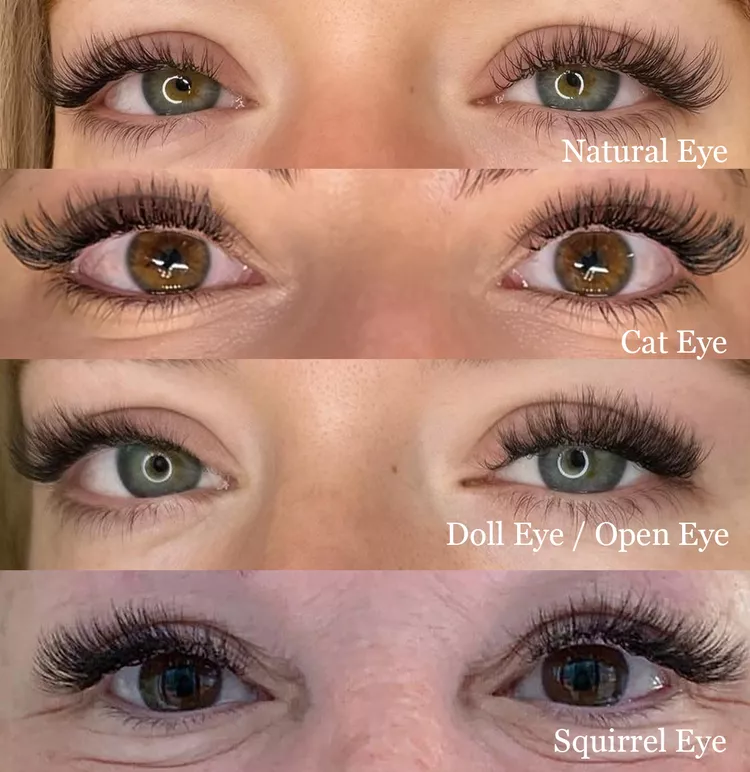
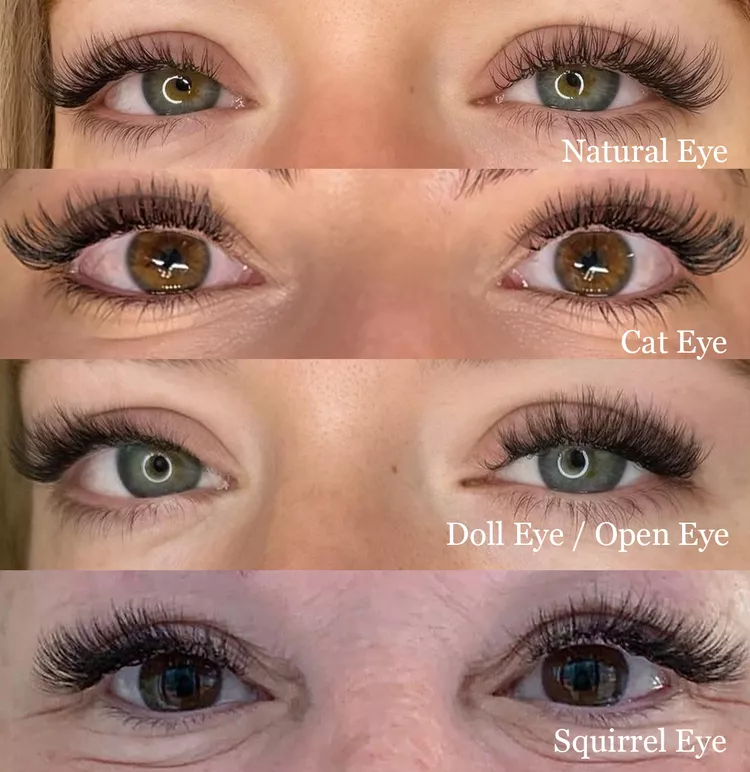
Natural Eye: This shape enhances natural lashes without substantially changing their appearance and is ideal for those who like a no-made makeup look. “Shorter extensions are placed towards the inner corner of the eye, gradually increasing in length and thickness towards the outer corner,” says Tsang, who adds that the style suits all eye forms.
Cat Eye: Longer, thicker lashes are applied to the outer portion of the eye, tapering towards the inner corner. “The result is a sexy, wing-like effect,” Fisher explains. The style may be adjusted from modest to dramatic, and it looks best on almond-shaped, round, close-set, and downturned eyes.
Doll Eye/Open Eye: This shape creates a wide-eyed appearance by having longer, more dramatic lashes in the centre of the lash line and tapering lashes in the outer and inner corners. They work well with round and almond-shaped eyes, as well as downturned ones.
Squirrel Eye: This appearance features lashes that are shorter on the inner corner, longer towards the arch of the brow, and slightly tapered on the outer corner. “The longest lashes are targeted above the eye to achieve both the open doll and sensual cat look. “They’re ideal for close-set eyes, high brow arches, or lashes that grow downward,” Fisher says.
The type of lash you choose will be decided by the form of your eyes and face, as well as the appearance you want to achieve. The most popular varieties are:
Classic Lashes: Applied one at a time, these lashes are delicate and ideal for everyday wear. “Of all the lashes, they’re the most natural looking and a safe bet for someone just starting out, although some clients find they don’t offer enough volume,” says Singleton.
Volume Lashes: Multiple lightweight lash extensions are applied to each natural lash. “A lash artist creates handmade lash fans by grouping several fine extensions, with the result being a dark and feathery look,” says Singleton. “They’re easily customizable, but there’s a lot of maintenance—refills can take up to two hours.”
Hybrid Lashes: This method combines classic and volume applications, creating a textured, wispy lash line that yet looks natural. “Hybrid sets are customizable and maintain their natural appearance as they grow and shed,” explains Singleton. “But they can be more expensive than classic and not as full as volume lashes.”
Russian Volume Lashes: These extensions give the look of a dramatic, winged eyeliner, adding fullness and density to the whole lash line. “They’re created using short, lightweight lashes and tend to have an impressive six-to-eight-week retention period due to their ability to wrap around and hold onto the natural lash,” notes Singleton. “But when the extensions shed, the eyes can look uneven.”
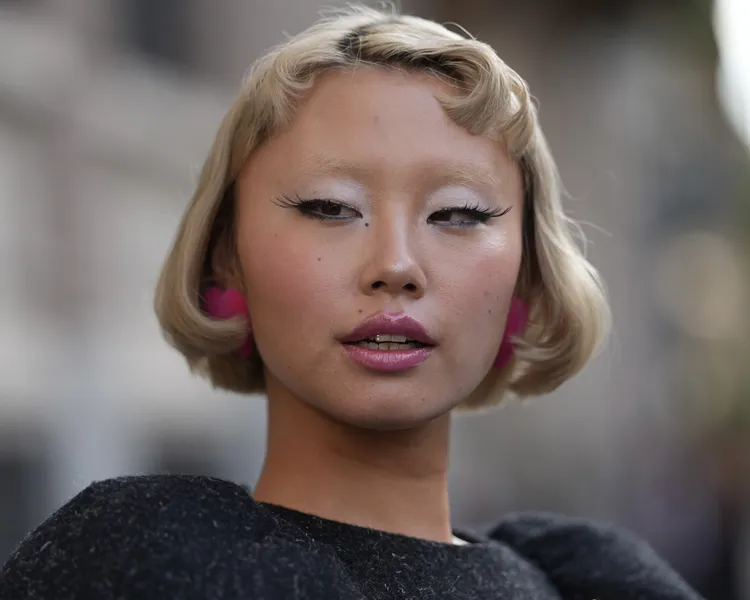
Wispy Lashes: Also known as staggered, textured, or strip lashes, this technique involves fanning several extensions at different spots along the lash line, resulting in wispy lashes that can be light and airy or dense and intense. “The final look is determined by how the fans are layered, and in many cases spikes—long individual lashes or closed volume fans—are added to the extension to create texture,” explains Tsang, who adds that more frequent fills may be required due to the lashes’ different lengths and angles.
Express Lashes: Typically made of synthetic mink and composed of many, ultra-thin individual lashes linked in a fan shape, express lashes use prefabricated volume fans to reduce application time. “They can often be applied in less than an hour but can have a uniform look,” says Tsang. Read: If you want something with a little more oomph, choose one of the styles listed above.
Curl Options
Finally, you can choose how curly you want your lashes to be. There are several varieties of curl patterns and lengths to pick from, and they are frequently characterised by letters. “Your lash artist will discuss which option is best for you based on your eyes and lifestyle,” says Singleton. Below are five of the most popular options:
J Curl: The small curl at the end of this extension resembles the letter J and is ideal for individuals who want volume and lift without a lot of drama.
B Curl: With a straight base and a curled tip, this extension offers somewhat more lift than a J curl.
C Curl: The most popular, a C curl resembles a naturally curled lash.
D Curl: The D curl is the curliest of all lash extensions, offering tremendous volume and lift.
The L curl, sometimes known as the “Barbie” curl due to its dramatic appearance, has a flat base followed by an exaggerated lift that resembles the letter “L”.
Other factors to consider
Getting the Right Thickness.
To determine thickness, your lash artist will analyse the strength, quality, and length of your natural lashes, as well as discuss your desired look. “Healthy and strong lashes can accommodate more dense and full extensions, while short or sparse lashes do better with ones that are thinner and less voluminous,” advises Dial. “Generally speaking, extensions range in size from.02mm to.25mm. “Yet anything over.18mm is no longer suggested or carried by competent lash artists, as they can result in breakage and poor retention,” explains Dial.
Selecting the Right Length
Lash extensions are available in a variety of lengths, commonly ranging from.06mm to.16mm (but they can be as short as.03mm and as long as.25mm), to fit varied styles. “Shorter lengths (.06mm to .11mm) provide a more natural look, while longer lengths (.12mm to .16mm) offer a dramatic and bold appearance,” says Tsang. “The rule of thumb is not to add an extension longer than 30 percent of the entire length of the natural lash.”
Matching Colour to Your Natural Lashes
Although black has long been the most popular lash extension colour, many artists are now matching extensions to their clients’ natural hair colour. “We’re seeing blonde, auburn, brown, and even white and grey lash extensions,” says Dial, who adds that it’s customary to utilise one or more of these colours to get the desired look. There’s also a market for colourful lashes in pink, green, purple, blue, and burgundy. “You can add a pop of color to a small section of lashes, cover all the lashes in one color, or mix in different hues,” says Tsang. “The upkeep is no different than with traditional black extensions, and the color won’t fade.”
The Bottom Line
Lash extensions are an excellent technique to make your lashes appear longer and voluminous. Though not everyone is a candidate, they are an excellent treatment for practically anyone who want more drama than their natural lashes can deliver. If you’re thinking about having lash extensions for yourself, consider the materials you want, your eye shape, your preferred lash type, and the curl pattern you want. Having all of the information on hand reduces the likelihood of leaving the lash studio with an unsatisfactory result. But even if it happens, try not to be concerned. Lash extensions only last a few weeks, after all.