After being deemed too graphic and frightening for streaming viewers, Kazakh Scary Tales, a neo-noir and folk-horror TV series, found a home among enthusiastic fans at festivals.
Adilkhan Yerzhanov, a Kazakh filmmaker, debuted the film at the Fantasia International Film Festival in Montreal this summer, and it was released locally in November.
The narrative centres on Birzhan, a police officer who is transferred to a distant community and must deal with dishonest officials while investigating unexplained deaths.
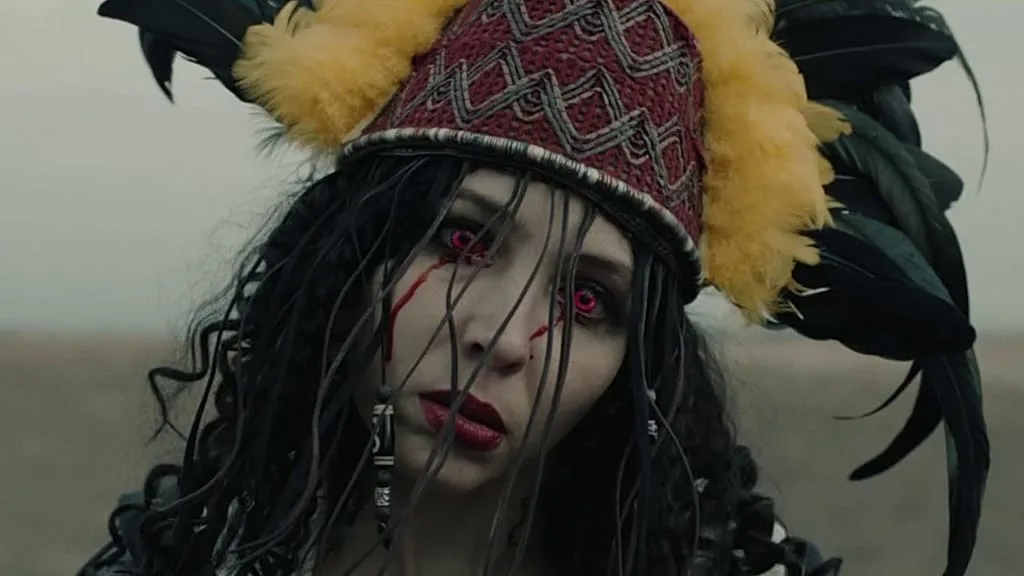
Together with a local witch, he discovers the old evil, how to combat it, and perhaps even the truth about himself.
Too scary for spoilers?
The show’s suitability for large crowds was questioned during early test screenings. Producers sent it to festivals instead of expecting commercial success because they believed it was too esoteric.
Take the scenario where the characters begin to bleed in the maternity unit, for instance. Is it even suitable for family viewing? It would be surprising, wouldn’t it? Yerzhanov clarifies.
However, when the first four episodes of the Tales were made available on YouTube, they surpassed expectations.

The blend of modernity and folklore is exactly what drew attention. The director stated, “Our audience was eager to see our folklore incorporated into a contemporary series.”
Online viewers praised the show, referring to it as the “Stranger Things of Kazakhstan” and sharing spooky folktales that have been passed down through the generations.
International reaction and social commentary
According to Yerzhanov, Kazakh filmmakers need to provide something unique in order to attract attention elsewhere.
“A Kazakh horror movie cannot be based on Japanese or Hollywood models. He says, “You can’t get noticed if you’re working within established rules.”
He thinks that the unique combination of humour and terror, as well as the uniqueness of the mythological monsters, were the two aspects of Kazakh Scary Tales that most appealed to horror enthusiasts.
“I discovered that the laughter in the scariest scenes attracts audiences from over the world. The director stated, “They find it incredibly intriguing, unique, and different.”

Birzhan’s bromance and banter with the local pathologist, in which they trade mildly offensive comments at random times, was emphasised in numerous reviews.
Horror fans, meanwhile, found the Kazakh mythological monsters to be quite unique.
As they say, the creators of the monsters in Kazakh Scary Tales are more dangerous than the monsters themselves. According to Yerzhanov, “they are intrigued by the fact that every monster in the series originated from injustice, from the deeds of some characters, some men.”
The series, which also serves as a societal reflection on violence against women, is centred around this issue. In the episode, women who have been harmed by males turn into monsters that gobble up those men and other people.

The albasty, a malevolent female figure from Turkic mythology who is thought to torture expectant mothers and newborns, is the focus of the first three episodes. The director notes that the majority of demons in Kazakh folklore are female, just like in many Eastern legends.
“Everything unreasonable, everything that a fighter or a man fears. According to Yerzhanov, he fears the illogical, which he associates with women.
Ancient fear
Yerzhanov’s decision to create his creatures without the assistance of computer-generated imagery was a pivotal one in the production. He was searching for a realistic depiction of the ancient horror that his mother had told him about when he was a child.

“These monsters didn’t appear computer-generated or sketched in my early mind; rather, they appeared incredibly realistic, almost physiological. The director stated, “I wanted to convey this physiology, this homegrown nature, in this series.”
For this reason, the group developed an animatronic albasty that is controlled by multiple individuals. For wide shots, a stunt performer used a prosthetic head.
They constructed a silicone-covered head carcass for close-ups, with one person moving the upper lip, another the lower lip, a third the tongue, and two more opening and closing the eyes.
“Any computer graphics led the monsters towards a pasteurised Hollywood, where everything is artificial, where everything is too modern,” he stated.

Although Yerzhanov personally dislikes horror films, he thinks that non-horror filmmakers like Stanley Kubrick’s The Shining and William Friedkin’s The Exorcist produced the best horror pictures.
Although the show is currently unavailable to viewers outside of Kazakhstan, the director claims he is working hard to make it available on streaming sites.