
It is only natural to desire to maintain your summertime glow as the cooler months approach. The body makeup or spray tan used to get that look isn’t natural, unless you know how to properly blend, color-match, and apply self-tanner.
Let’s look at these pictures, for instance, which show some difficult makeup and self-tanner applications:
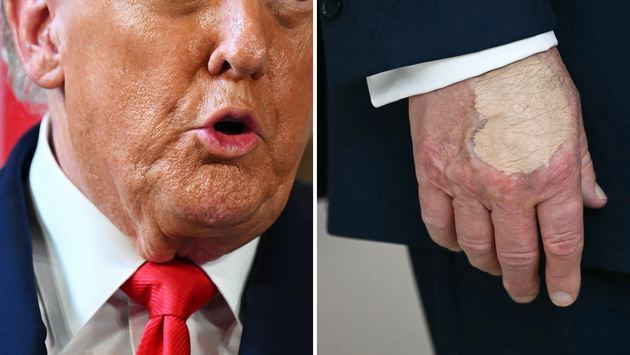
Celebrity groomer, hairstylist, and makeup artist Bryan Cantor told HuffPost, “We see that the chosen foundation shade does not match his undertone (let alone his skin tone).”
“Even the most experienced people can run into small application hiccups,” Trina Eibon, business manager of the at-home spray tan company IONIQ, told HuffPost. Errors and choosing the wrong shade of tanner for your skin tone can be amplified by bright light and flash photography. The face-neck mismatch in the images on this page is “one of the most common application errors when using traditional self-tanners that require manual blending,” she said.
She also mentioned that when a self-tanner doesn’t match the pH of your skin, an undertone shift toward orange may occur. “A lot of traditional tanners don’t adjust to different skin tones, which can result in results that don’t look natural.”

The face, neck, and chest “receive different amounts of sunlight and will usually be three different colors,” according to Cantor. In order to “unify all three areas to the same skin tone,” he advises matching to your chest and “using that shade on your face and neck.” He emphasizes how crucial it is to apply tanner or cosmetics from the face to the neck. “To ensure a natural-looking application, blend your foundation onto your neck or match it to your face if your chest isn’t visible in your chosen outfit,” Cantor told HuffPost.
It’s all in the blending — and not just for makeup
Cantor added that it’s likely that the self-tanner “has been applied poorly” in these pictures. “You should always be sure to blend it onto the ears and neck,” he advises when using self-tanner or foundation on the face.
According to Cantor, “be aware of your hairline if you are trying to deepen your skin tone with foundation or self-tanner” is essential for a perfect appearance. According to him, this is particularly important “if you choose a much darker shade and you have thin hair or a sparse hairline.” Your scalp cannot be tanned, and you will be able to tell the difference between tanned and untanned skin.
“Use a big, dense makeup brush designed for buffing,” is his preferred method. After applying the product directly onto the brush, I buff it in after tapping the tanner over a section of my face to guarantee even application. He will next use an arching brush to work into the neck and hairline. Lastly, “use the brush to buff the tanner onto my ears after applying a light moisturizer to the ears beforehand” is the final step for a natural-looking appearance.
In addition to preventing uneven coloring, he told HuffPost that this method keeps cosmetics or self-tanner from building up “in the nooks and crannies and oddly-shaped parts of the ear, which would cause the tanner to process darker in those areas.”
Let’s talk about using concealer on your hands
Cantor claims that there is a reason why wearing makeup on your hands isn’t common: “Hand makeup will transfer every time your hand comes in contact with clothes.”
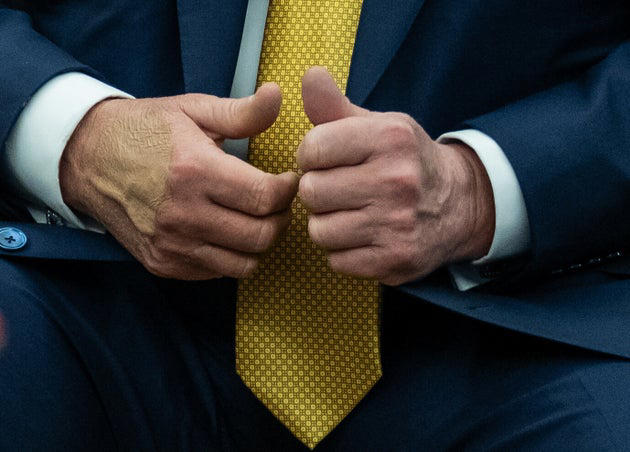
He does not advise spot treating hand blemishes, bruising, liver spots, or aging. “This kind of spot treatment with concealer will always appear phony and obvious if the surrounding skin is not addressed. A transfer-proof body or leg foundation could be used by some people to reduce age spots on their hands, but even this is not infallible because we use our hands so frequently that it will probably wear off very rapidly.
High-definition photography is always clear, and 4D technology requires a makeup artist who knows how skin and skin makeup appear on camera. Cantor clarified, “This may have appeared acceptable in person, but it is glaringly obvious on camera.”
Eibon recommends using a transfer-proof leg makeup to hide dark varicose veins if you insist on wearing hand makeup. But when it comes to self-tanner, the secret is to “use minimal product, feather across knuckles and between fingers and then clean nails and cuticles,” according to Eibon.