
According to legend, Venus, the Roman goddess of love, invented red roses. Distracted by the death of her lover, Adonis, she pricked herself and dyed a bush of white roses. Despite being mortal, Cleopatra was said to scatter petals around her room to enchant her lover, Marc Antony. Roses have long been a powerful motif in love stories, from Shakespeare’s Romeo and Juliet to reality TV’s The Bachelor symbolises love, beauty, and devotion. In the world of perfume, roses elicit all of these emotions and more.
“It’s one of the three most important natural materials for perfume,” says D.S. & Durga co-founder and perfumer David Moltz. The rose’s significance dates back to 10th-century Persia, now Iran, where rose oil became an important part of beauty, cooking, and religious rituals. By the Renaissance, rose oil had spread west, becoming popular in Europe and among American women during the Victorian era. It’s no surprise that the flower feels so special when only one ounce of rose absolute (the main ingredient in rose perfumes) is produced from 60,000 roses. “Roses have always had a connotation of value, and people have linked that with the value and beauty of love or human connection,” says fragrance historian Jessica Murphy. With over 30,000 different rose varieties, the scents that can be extracted from them are nearly infinite. “Rose is as versatile as it is distinctive,” says Aerin Lauder, the founder and creative director of beauty brand Aerin, who recently published her new book Living with Flowers. This fluidity is reflected in how rose notes are used in a variety of fragrances. For example, in Guerlain Nahema, a bold, sweet scent released in 1979, rose coexists with peach, bergamot, and aldehydes. Rose, on the other hand, frequently fades into the background, as in Chanel No.5, a powdery classic that opens with a sparkling, almost soapy aldehyde note. However, rose scents were not always as varied.
Prior to the introduction of synthetic ingredients around the turn of the twentieth century, all perfume was made from natural ingredients. Murphy describes the simple fragrances of the 1860s and 1870s as focusing on a single flower, often rose. By the 1930s and 1940s, the introduction of ingredients such as aldehydes had made perfumes more modern and complex, with notes of amber and musk. The generation growing up then was the first to associate rose scents with their grandmothers, Victorian women who grew, displayed, and wore roses. However, the stereotype persisted even as fragrance trends changed. Though they are still associated with grandmothers today, six generations have passed since the one-note rose perfumes of the late 1800s. “Seeing Rose as older is really anachronistic,” Murphy explains. “A lot of grandmothers right now, demographically speaking, are probably wearing vanilla perfumes, or Dior J’adore, or Thierry Mugler Alien, which were not rose-oriented.”
In the mid-2010s, a slew of niche fragrance brands began redefining the rose scent, transforming it from a traditional symbol of femininity to a more nuanced expression of identity. Le Labo Rose 31, a woody, unisex scent launched in 2006, was intended to transform “a symbol of voluptuousness and unqualified femininity into an assertively virile fragrance,” according to the brand. Byredo’s Rose of No Man’s Land was inspired by a nickname given to WWI nurses. Luxury brands followed suit. Hermès Ikebana and the popular Frederic Malle Portrait of a Lady are both rose scents with sleeker visuals and more modern marketing. “That more minimalist packaging and that all-gender positioning on the counter encouraged more people to feel comfortable reaching for a perfume that had rose in the notes,” according to Murphy.
According to Murphy, the concept of genderless rose scents calls into question a thousand-year legacy as a symbol of femininity, citing associations with figures such as Venus.”It’s useless for a company to tell the consumer ‘this is for men; this is for women,'” says Moltz, the nose behind Rose Atlantic, D.S. & Durga’s light, beachy, cult favourite. “For instance, Rose Atlantic would be more traditionally feminine, but I think it’s great on men as well,” says Moltz, likening it to the scent of a single flower on a lapel. Autumne West, Nordstrom’s national beauty director, concurred. “Any scent is unisex if you want it to be.”
As marketing became more androgynous, sex appeal increased. In 2019, Régime des Fleurs collaborated with Chloë Sevigny to release Little Flower. The advertisements provide a more abstract and erotic take on the beautiful woman holding flowers trope. Sevigny poses against a black backdrop, almost naked except for a few strategically placed roses, her hands cupped around a splayed-open grapefruit. “Chloe Sevigny has always embodied the New York It girl image. The ads are more edgy. “They’re a little sexier than I think people expected,” Murphy admits. “But that’s a niche, independent brand that can do what they want without focus groups.” It will take some time for the trend to spread to larger brands, but we are already seeing the ripple effects, with traditional perfume houses producing their own modern takes.
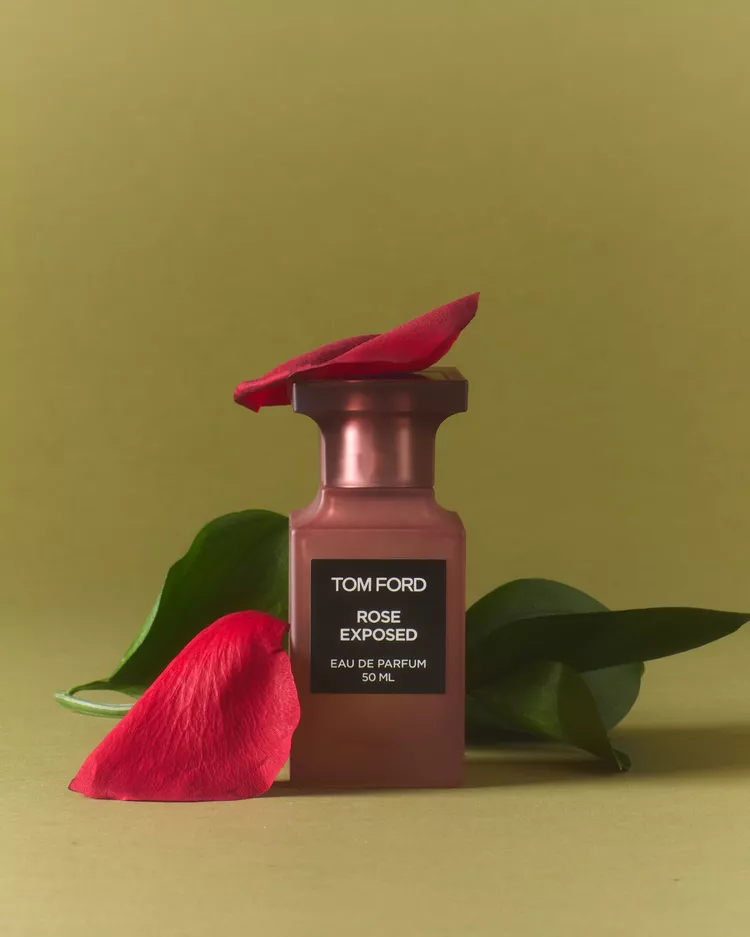
Tom Ford debuted Rose Exposed in January, a bold and spicy unisex scent that balances rose notes with white pepper and leather accords. That same month, Jo Malone debuted Taif Rose Cologne Intense, which opens with a deep, dark coffee note before revealing the full bloom of a soft damask rose. Following the release of an 11-piece rose collection late last year, Lancôme introduced Power Eau De Parfum Intense, a pomarose-scented addition to the Idôle line. “We’ve noticed a lot of customer interest in gourmands and florals. West describes scents with notes of vanilla, lavender, jasmine, and rose.